
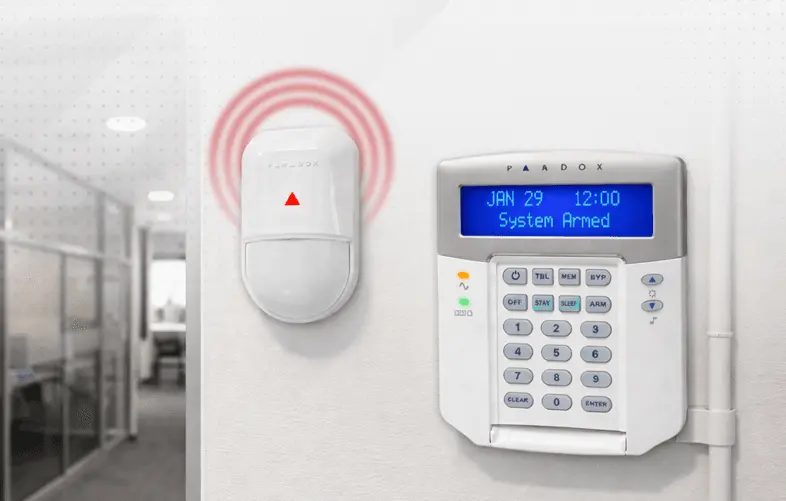
An intrusion alarm system is an electronic security system designed to detect unauthorized movement or entry into a protected area. It monitors doors, windows, rooms, corridors, entrances, and other sensitive areas using different types of sensors and detectors.
When the system detects an unexpected event, the control panel processes the signal and activates the appropriate response. This may include triggering a siren, notifying security personnel, or sending an alarm notification to a monitoring center.
Unlike security measures that only respond after an incident occurs, an intrusion alarm system is designed to provide early detection, helping security teams respond before a situation becomes more serious.
How Does an Intrusion Alarm System Work?
An intrusion alarm system consists of several components that work together to protect a property.
The control panel is the central part of the system. It receives information from connected detectors and determines whether an alarm condition exists.
Motion detectors monitor specific areas for movement and are commonly installed in offices, corridors, warehouses, entrances, and other protected spaces.
Door and window contacts detect when a protected door or window is opened. They are particularly useful for monitoring external entrances and other access points.
Glass-break detectors can detect the sound or vibration associated with broken glass, providing another layer of protection for properties with large windows or glass entrances.
Keypads and access devices allow authorized users to arm or disarm the alarm system using a secure code or other authentication method.
When an alarm condition is detected, sirens and sounders can provide an immediate audible warning. Communication devices can also transmit alarm information to designated personnel or monitoring systems.
Why Is an Intrusion Alarm System Important?
Installing an intrusion alarm system provides several important security benefits.
1. Early Detection of Intruders
One of the main advantages is the ability to detect unauthorized activity at an early stage. Sensors can identify movement or access attempts and generate an alarm before an intruder has the opportunity to cause significant damage.
2. 24/7 Security Monitoring
An intrusion alarm system can continuously monitor a property, including during evenings, weekends, holidays, and periods when the building is unoccupied. This provides an additional level of protection outside normal working hours.
3. Faster Security Response
When an alarm is triggered, immediate notifications can help responsible personnel respond quickly. Rapid awareness of a security event can reduce potential losses and improve overall incident management.
4. Protection of Valuable Assets
Businesses often have valuable equipment, documents, inventory, technology, and other assets that need protection. Intrusion detection helps secure sensitive areas and reduces the risk associated with unauthorized access.
5. Integration With Other Security Systems
Modern alarm systems can be integrated with other security technologies such as CCTV surveillance, access control, intercom systems, and building management systems. Integration allows different security systems to work together and provides security teams with a more complete view of what is happening within a facility.
Where Are Intrusion Alarm Systems Used?
Intrusion alarm systems can be designed for properties of different sizes and security requirements. Common applications include:
Commercial offices and business centers
Banks and financial institutions
Retail stores and shopping facilities
Warehouses and logistics centers
Industrial and manufacturing facilities
Oil and gas sites
Government buildings
Schools and educational facilities
Residential properties
Server rooms and data centers
Restricted and high-security areas
Each environment requires a different security approach. A professional assessment can identify vulnerable areas and determine the appropriate combination of sensors and alarm devices.
Choosing the Right Intrusion Alarm System
Selecting the right intrusion alarm system depends on several factors, including the size and layout of the property, number of entrances, operational hours, security risks, and assets that need protection.
A professional security provider should evaluate the site before designing the system. This helps determine where detectors should be installed and how different areas should be divided into security zones.
The system should also be configured to minimize false alarms while maintaining reliable detection. Regular maintenance and testing are equally important to ensure that sensors, batteries, communication devices, and alarm components continue to operate correctly.
Professional Installation Makes a Difference
Even high-quality security equipment may not provide effective protection if it is poorly designed or incorrectly installed. Professional installation ensures that detectors are positioned correctly, security zones are properly configured, and the system communicates reliably with other security devices.
Regular inspections and maintenance can also identify potential problems before they affect system performance.
Intrusion Alarm System Maintenance
Regular maintenance is essential to keep an intrusion alarm system reliable and effective. Sensors, batteries, control panels, sirens, and communication devices should be inspected and tested regularly.
Professional maintenance helps identify faults early, reduce false alarms, and ensure the system is ready to respond when a security threat occurs.
Conclusion
An intrusion alarm system is an important component of a modern security strategy. By detecting unauthorized access and suspicious movement, it provides early warnings and helps security personnel respond quickly to potential threats.
For businesses, industrial facilities, government buildings, and residential properties, a properly designed intrusion alarm system can provide reliable protection around the clock. When combined with CCTV, access control, and other security technologies, it can create a comprehensive security solution tailored to the specific needs of the property.
Investing in professional security design, installation, and maintenance is an important step toward protecting people, property, and valuable assets from unauthorized access.